Gaischterhuus (Ghost House)
English · Deutsch · Photographs · Hidden works · Films
About the installation
Gaischterhuus is a room installation made up of four interconnected elements: a constructed space called The Blue Room, a large drawing, a figure called Kinderfresser (Child Eater), and a film. The work is not about ghosts in a literal sense. It concerns personal experience, the decisions we make, and the fears and hesitations that accompany the exploration and development of the self: our own ghosts.
Harmony, poetry and nostalgia are central to the work. It approaches the world through the wonder of a child and the reasoning of an adult, without separating the two. The elements form a composition of different experiences and perspectives. Nothing is explained or taught. Visitors are invited to enter the space, make their own connections and explore.
The four elements
The Blue Room
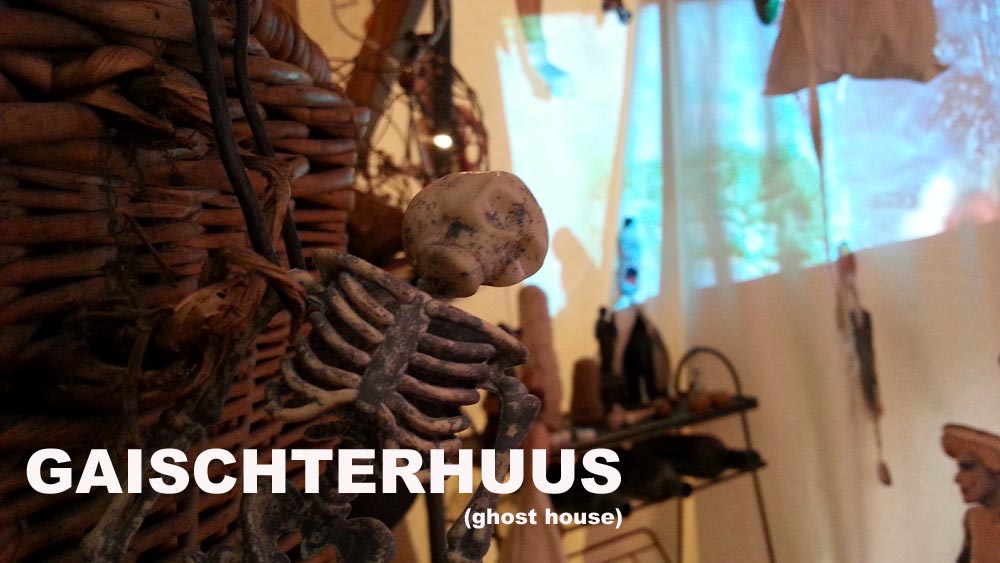
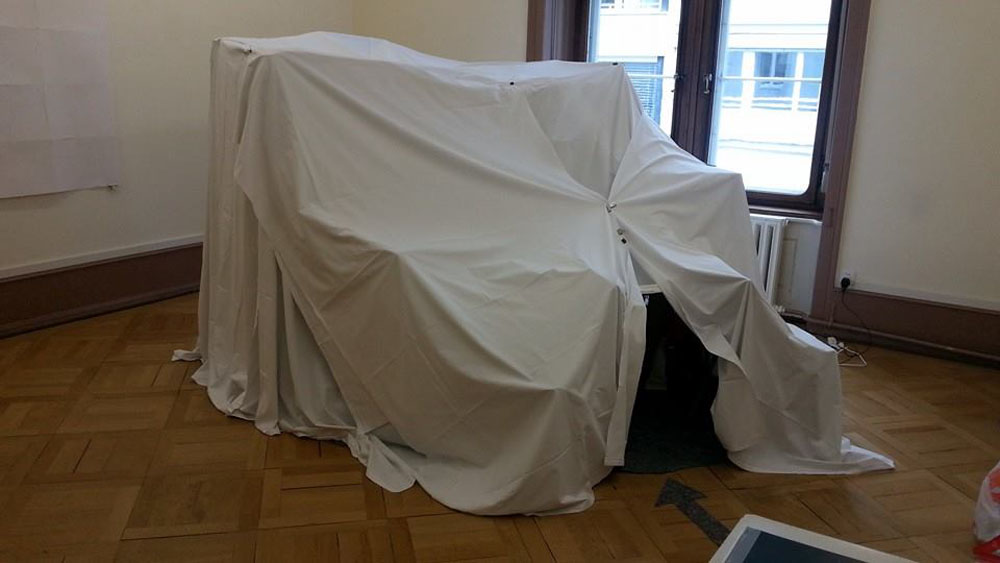
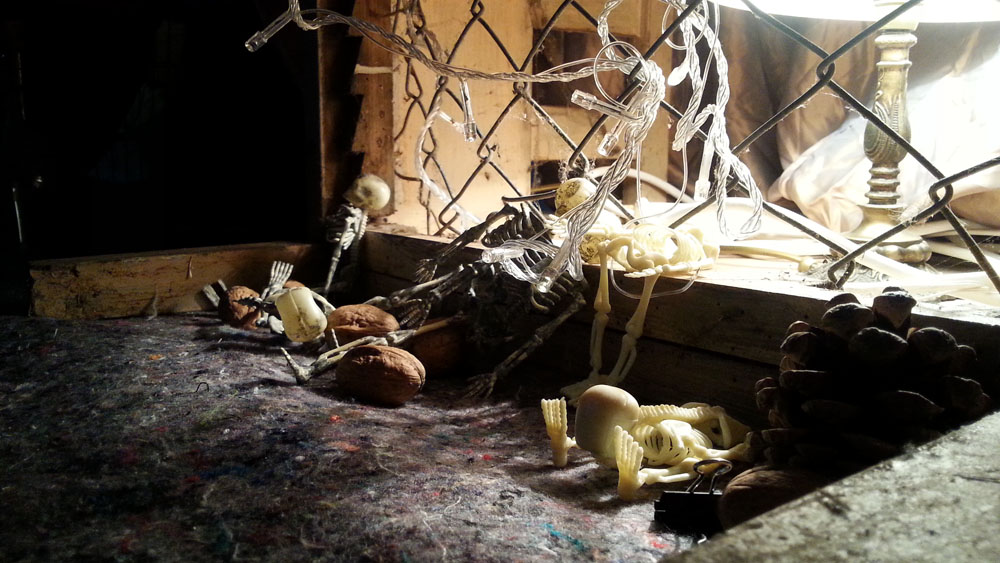
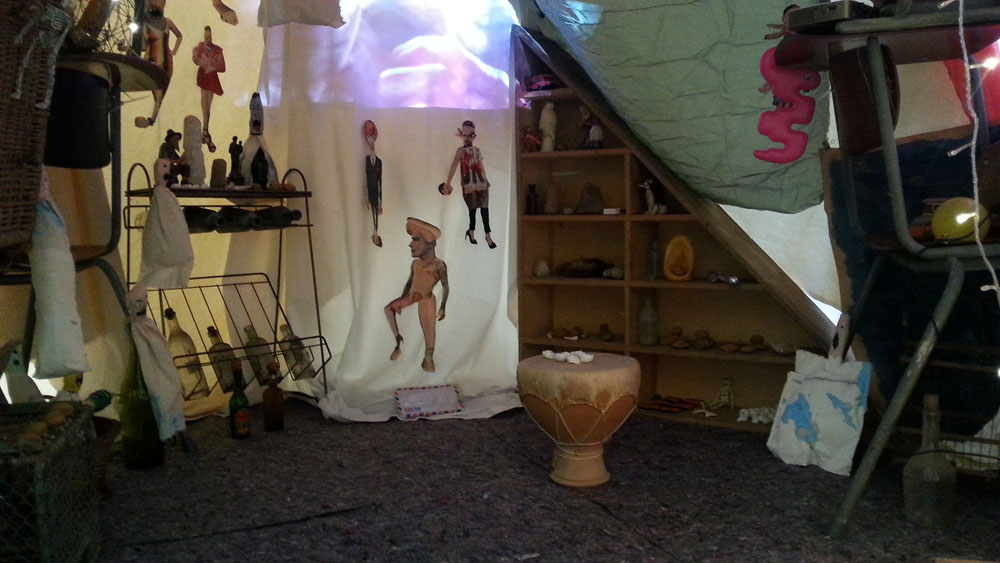
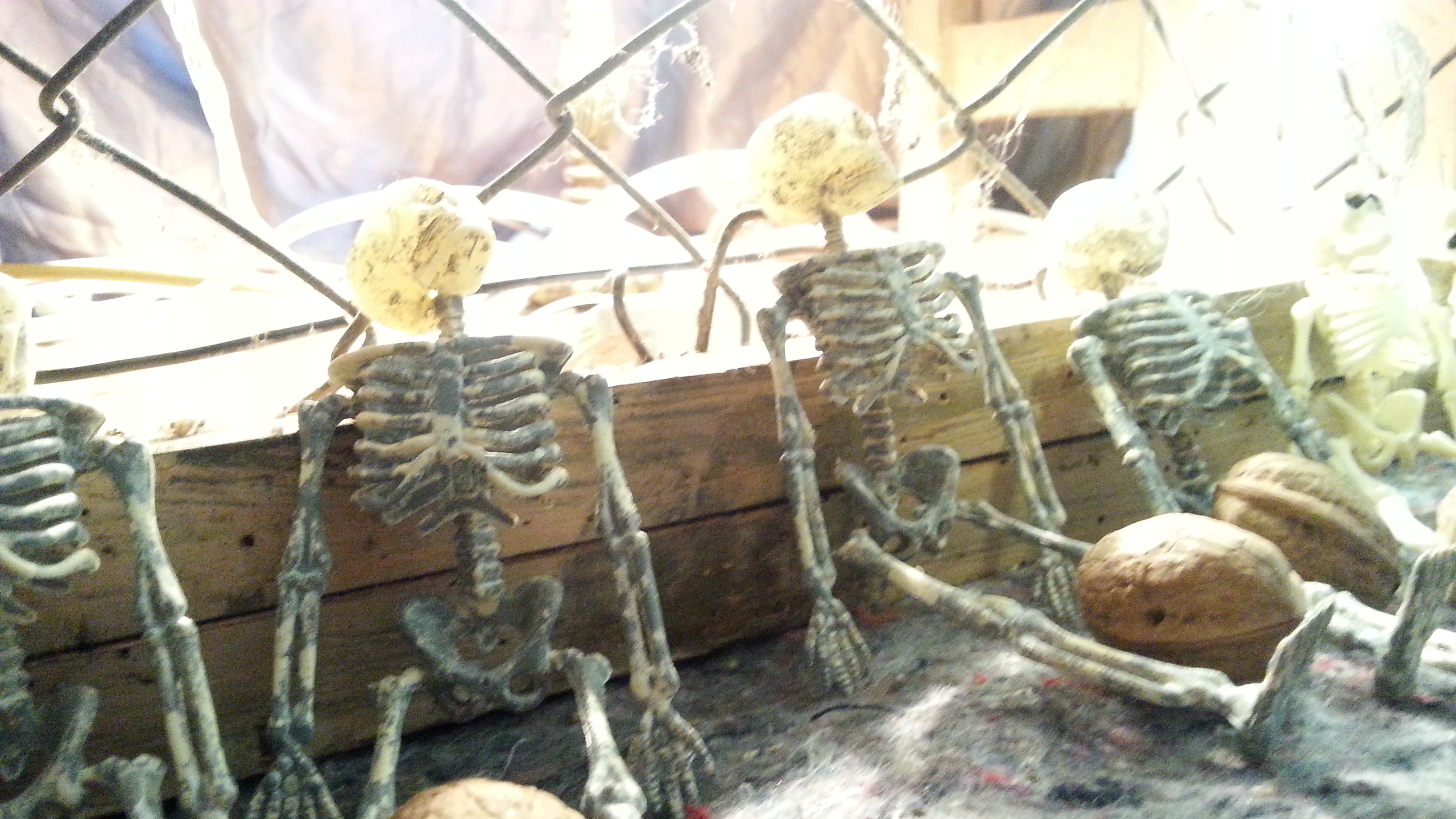
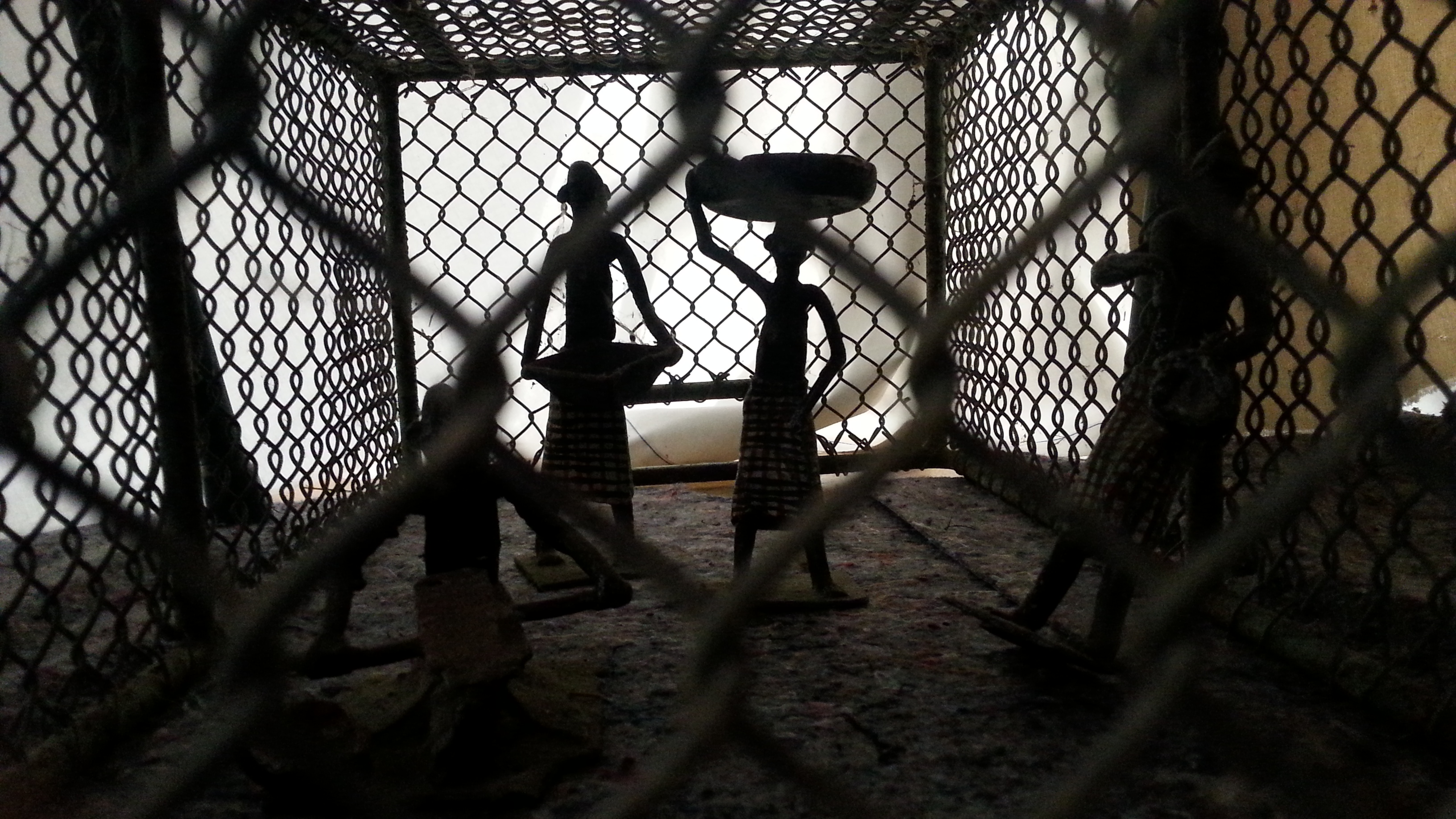
The Blue Room is a constructed space, a sculpture in which the child, now an adult, creates a reality of their own. It is enclosed, yet filled with objects that suggest other places and other possible lives. It is somewhere to work, make things and live. Although temporary, it can feel complete and self-contained, a world in its own right.
The structure is made from furniture, bed sheets, fabrics and personal objects borrowed from the exhibition's curator, Clément Stehlin, and from my father, Franzueli Rechsteiner. Many of these objects carry their own histories. The installation could not have taken this form without their contributions, which become part of the work itself.
The Blue Room also exists outside the installation. My father has a room in his house filled with souvenirs, stones, bones, instruments and other objects. It is an enclosed, peculiar world that helped inspire this construction.
Drawing
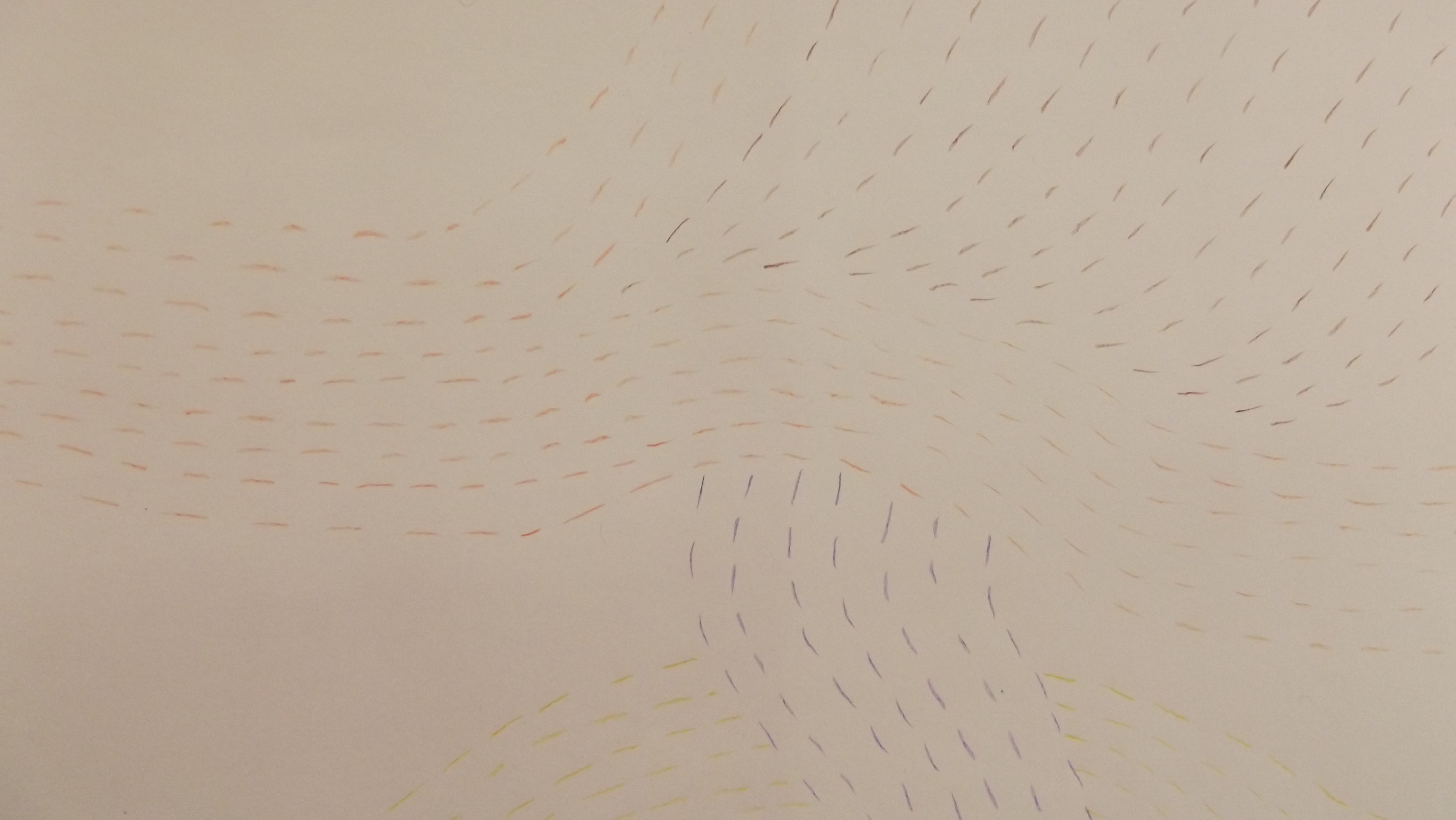
A coloured-pencil drawing extends across 16 A3 sheets arranged as a rectangle. It explores searching, making decisions, fear, caution and growth. From a distance, the paper appears almost blank. Only as the viewer approaches do the fine coloured lines become visible. Getting close, and taking the risk of looking, is essential to discovering what is there.
Kinderfresser (Child Eater)
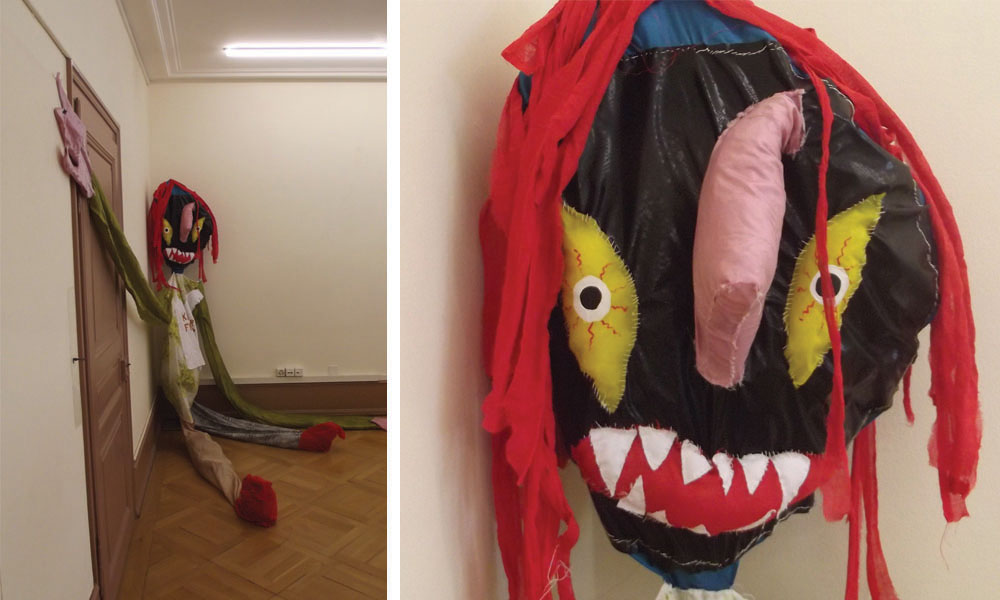
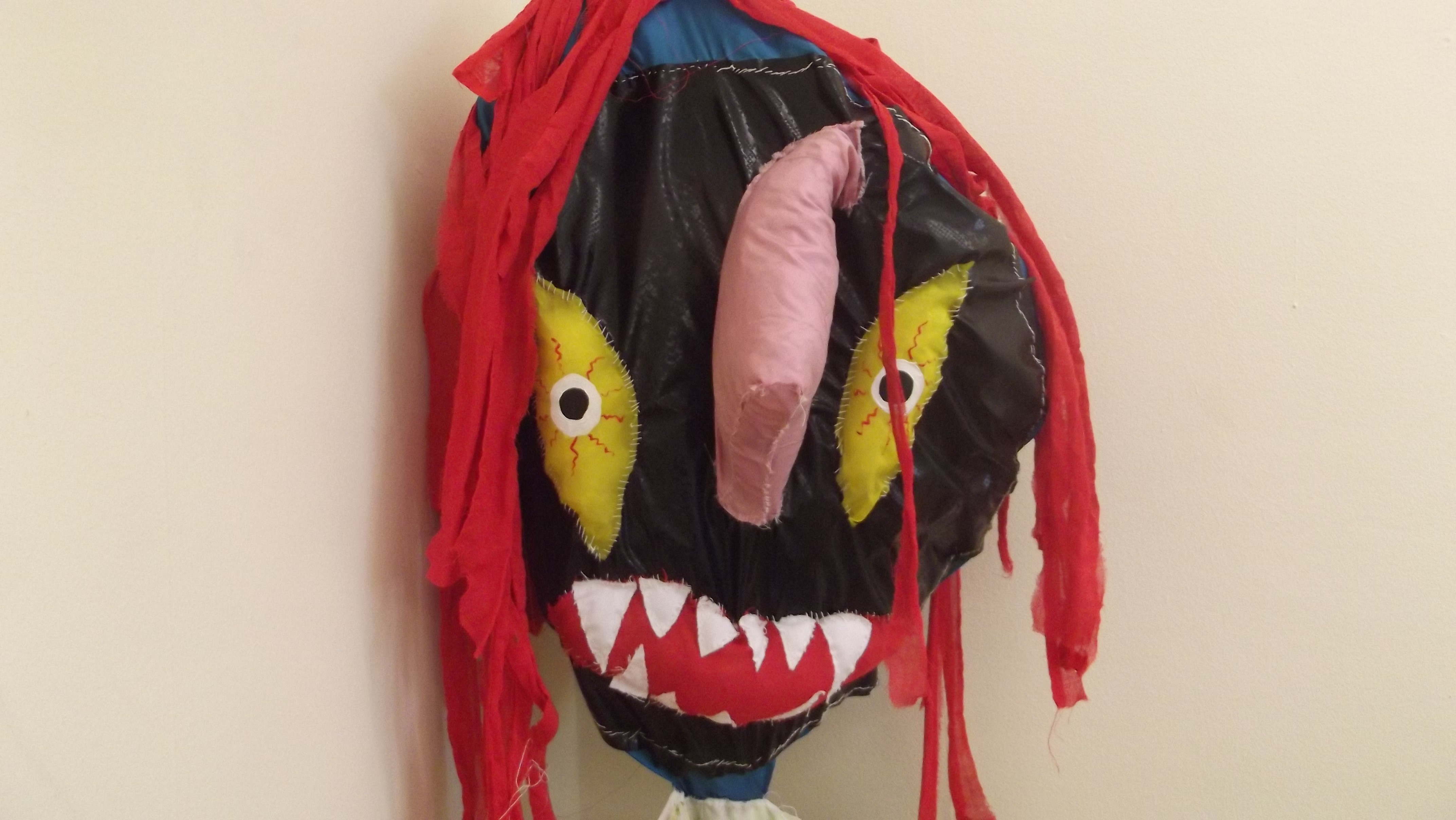
Kinderfresser is a large sewn puppet seated in a corner, watching the room. Cast out of The Blue Room, it is made partly from the same fabrics used inside the structure. It recalls a carnival figure or masked character looking out through two openings. The mask changes the way it encounters the world. The figure is unsettling and mysterious, but also curious, unfamiliar and nostalgic.
Film: Inside the Blue Room
The film centres on my father in his own Blue Room. He handles and examines objects carefully, absorbed in an activity that does not need a conventional narrative. The accompanying sounds were recorded in the room itself. The film is projected inside the installation's constructed Blue Room.
On the artist's ego
One of my concerns in making this work was to reduce the presence of my own ego. I wanted the different elements to exist beyond my explanations and intentions, rather than serve as illustrations of a message. For me, the installation matters as a whole: the relationships between its elements, its atmosphere and the experience of entering it. Whether or not I succeed in stepping back is less important than the process of making and the life of the work itself.
Installation photographs


Films
Additional archive photographs
Two sets of photographs were also linked from the original documentation: photograph archive 1 and photograph archive 2. These are historic OneDrive links and may no longer be available.
Gaischterhuus (Geisterhaus)
Gaischterhuus ist eine Rauminstallation aus vier miteinander verbundenen Elementen: der Konstruktion Das Blaue Zimmer, einer grossformatigen Zeichnung, der Figur Kinderfresser und einem Film. Es geht nicht um Geister im wörtlichen Sinn, sondern um persönliche Erfahrungen, Entscheidungen und die Angst oder Vorsicht, die das Erforschen und die Entwicklung des eigenen Selbst begleiten: um die eigenen Geister.
Harmonie, Poesie und Nostalgie sind wesentliche Bestandteile der Arbeit. Sie betrachtet die Welt zugleich mit den staunenden Augen eines Kindes und mit dem Verstand eines Erwachsenen. Die einzelnen Elemente bilden ein Zusammenspiel unterschiedlicher Erfahrungen, Sichtweisen und Positionen. Es wird nichts erklärt und nichts gelehrt. Die Besucherinnen und Besucher können die Zusammenhänge selbst entdecken und eigene Assoziationen entwickeln.
Das Blaue Zimmer
Das Blaue Zimmer ist ein magischer Ort, an dem das Kind in Gestalt des Erwachsenen seine eigene Wirklichkeit erschafft. Es ist ein abgeschlossener Raum voller Gegenstände, die auf andere Orte und mögliche Lebensformen verweisen. Hier wird gearbeitet, gebaut und gelebt. Der Raum ist nur vorübergehend vorhanden und kann dennoch als vollständige, eigenständige Welt erfahren werden.
Die Konstruktion besteht aus Möbeln, Bettlaken, Stoffen und persönlichen Gegenständen, die mir der Kurator Clément Stehlin und mein Vater Franzueli Rechsteiner zur Verfügung gestellt haben. Viele dieser Gegenstände sind alt und mit Erinnerungen verbunden. Dadurch werden mein Vater und der Kurator selbst Teil der Arbeit. Ohne sie hätte das Gaischterhuus diese Form nicht annehmen können.
Das Blaue Zimmer existiert nicht nur innerhalb der Installation, sondern auch im Haus meines Vaters. Es ist ein besonderer, in sich geschlossener Raum voller Erinnerungsstücke, Steine, Knochen, Instrumente und anderer Gegenstände. Diese eigene kleine Welt war eine wichtige Anregung für die Installation.
Zeichnung
Die Farbstiftzeichnung erstreckt sich über 16 A3-Blätter, die zu einem Rechteck angeordnet sind. Sie beschäftigt sich mit dem Suchen, dem Entscheiden, mit Angst, Vorsicht und Wachstum. Aus der Ferne erscheint das Papier beinahe leer. Erst wenn man nähertritt, werden die feinen farbigen Linien sichtbar. Um etwas zu entdecken und zu verstehen, muss man sich den Dingen nähern.
Kinderfresser
Der Kinderfresser ist eine grosse genähte Puppe, die in einer Ecke sitzt und das Geschehen beobachtet. Sie wurde aus dem Blauen Zimmer verstossen und besteht teilweise aus denselben Stoffen, die auch dessen Inneres auskleiden. Die Figur erinnert an eine Fasnachtsgestalt, an einen Maskenträger, der die Welt durch zwei Öffnungen betrachtet. Die Maske verändert seinen Blick auf die Umgebung und damit auch sein Verhalten. Er wirkt unheimlich und rätselhaft, zugleich aber auch neugierig, fremd und nostalgisch.
Film: Im Blauen Zimmer
Im Mittelpunkt des Films steht mein Vater in seinem Blauen Zimmer. Er beschäftigt sich aufmerksam mit den Dingen, die ihn umgeben, und untersucht einzelne Gegenstände. Eine eigentliche Handlung gibt es kaum. Die Geräusche wurden im selben Raum aufgenommen. Der Film wird innerhalb der Konstruktion des Blauen Zimmers projiziert.
Zur Rolle des künstlerischen Egos
Ein wichtiger Aspekt dieser Arbeit ist der Versuch, mein eigenes Ego zurückzunehmen. Die einzelnen Teile sollen nicht bloss meine Ideen illustrieren oder eine Botschaft vermitteln. Ich möchte, dass sie ein Eigenleben entwickeln können. Entscheidend ist für mich das Zusammenspiel aller Elemente, die Atmosphäre und die Erfahrung des Raumes als Ganzes, als Gesamtkunstwerk. Ob es mir gelingt, mich als Künstler zurückzunehmen, ist dabei weniger wichtig als der Prozess und das Werk selbst.